Inside the Method
My Answers on Cannabis Cuisine
What’s your approach
to infusing cannabis into food?
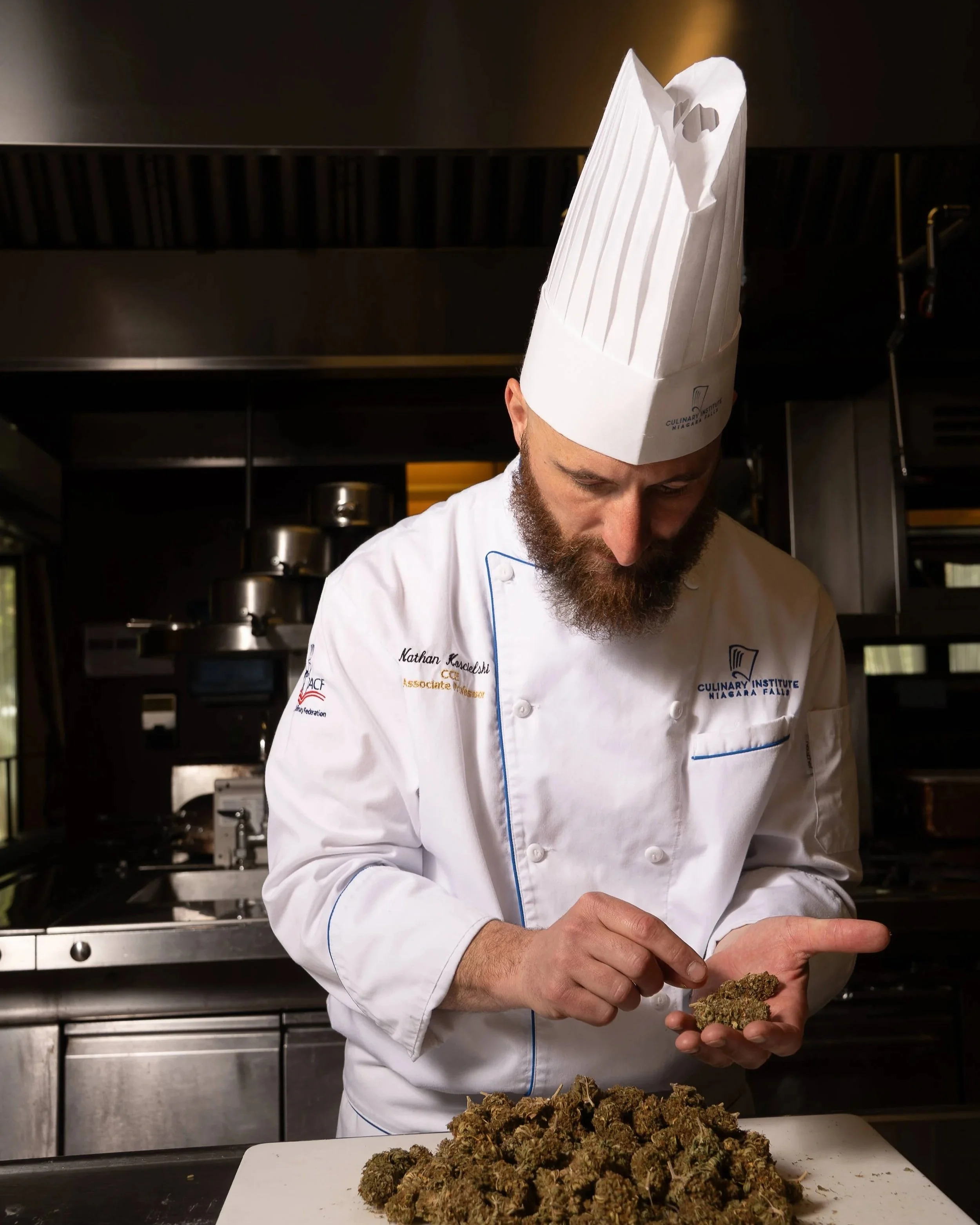
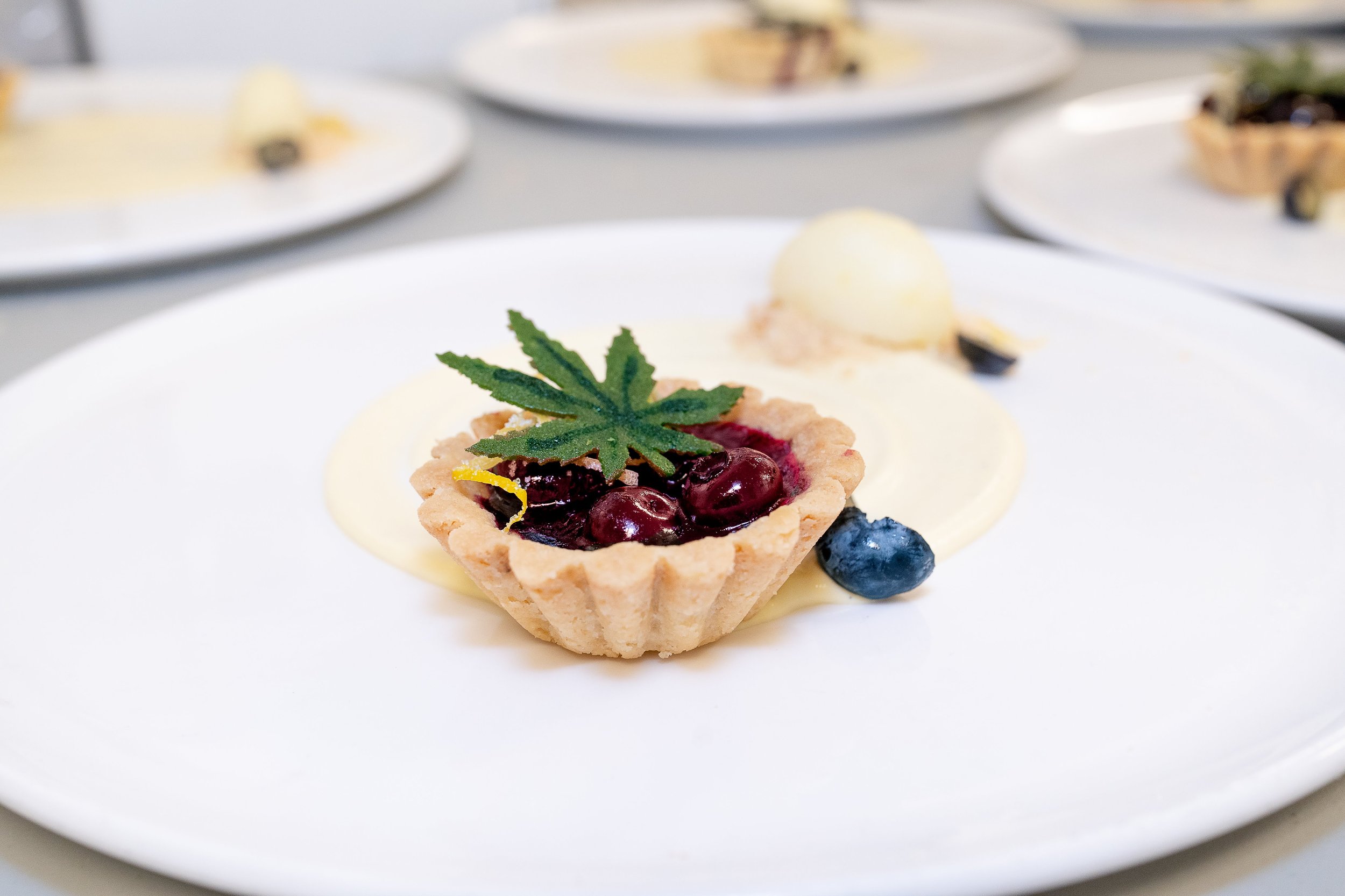
In my teaching, I train chefs to infuse only a single component of a dish—most often the sauce, dressing, or garnish. This approach allows the same base dish to be served in multiple cannabinoid and terpene dosages, accommodating guests with a wide range of tolerance levels.
A simple brownie illustrates this perfectly. If the brownie batter itself is infused, every brownie will carry the same potency. However, if the brownies are baked uninfused and finished with buttercream frosting, the chef can offer multiple options: uninfused (0 mg), or infused at 5 mg, 10 mg, 15 mg, and beyond.
This method empowers guests to choose their preferred dosage while preserving both safety and enjoyment. Additionally, once the appetite-stimulating effects of THC take hold, guests can enjoy as many uninfused brownies as they like—without the risk of overconsumption or a “green out.”
How is cannabis-infused food different in flavor from regular food?
When done correctly, it shouldn’t taste “different” at all. Cannabis has a flavor, but it doesn’t need to be dominant. A professional approach minimizes bitterness and allows the dish to taste like food first. If cannabis is the loudest flavor, something went wrong.
Is cannabis cooking mainly about flavor, or is it about getting high or feeling relaxed?
Professionally, it’s about designing an experience, not chasing an effect. Flavor, pacing, dosage, and guest comfort all matter. If the goal is simply intoxication, food is the wrong medium. Cannabis cuisine is about intention, control, and respect for the diner.
What makes your method different from typical cannabis cooking?
Most cannabis cooking focuses on infusion itself. My method focuses on design. I teach chefs to separate the base dish from the infused component so that dosage, safety, and guest choice remain flexible. The goal is a system that works in real kitchens, not a one-off recipe.
Do you teach recipes or principles?
Principles first. Recipes change. Laws change. Ingredients change. A solid method stays relevant. I teach chefs how to think through infusion decisions so they can adapt to different kitchens, clients, and regulations.
What kind of background do I need to start working with cannabis?
You don’t need a cannabis background—you need a culinary one. If you understand basic cooking techniques, food safety, and flavor balance, cannabis becomes just another ingredient category with specific constraints.
How do I learn cannabis cooking the right way?
Most people start by experimenting at home, and that’s where problems usually begin. Cannabis cooking has a narrower margin for error than traditional cuisine, especially when you’re cooking for others.
My courses are designed to replace guesswork with method. I teach chefs how to design dishes that are safe, repeatable, and service-ready—whether for private dining, events, or education. If you’re serious about working with cannabis professionally, structured training shortens the learning curve and prevents costly mistakes.
How long does it take to get trained and start working in this field?
That depends on your starting point. A solid culinary foundation shortens the learning curve significantly. What takes time isn’t technique—it’s learning restraint, accuracy, and responsibility. I focus on getting chefs operationally ready, not just conceptually informed.
Are there many job opportunities in the cannabis cuisine field?
There are fewer traditional jobs than people expect, and more nontraditional ones. Most opportunities are in private dining, consulting, education, product development, and events—not line cook positions. This field rewards chefs who can design systems, not just recipes.
Does specializing in cannabis cooking offer better pay or career advantages?
Cannabis cooking isn’t automatically higher paid—but it can be strategically valuable. When done professionally, it differentiates you, opens consulting paths, and allows you to work at the intersection of cuisine, compliance, and guest experience. The advantage comes from how you apply it, not from the word “cannabis” alone.